

Protecting Taiwan’s Information and Communication Networks from China’s Attempts to Cut Them Off (AI-Assisted Abstract)
Source: CNAS (26.05.28)

Taiwan’s ability to maintain communications is a central component of national resilience because information flows underpin government coordination, military operations, public confidence, economic activity, and international engagement. Any attempt to disrupt communications is therefore not merely a technical challenge but an effort to weaken Taiwan’s capacity to function, coordinate responses, and sustain resistance during a crisis.
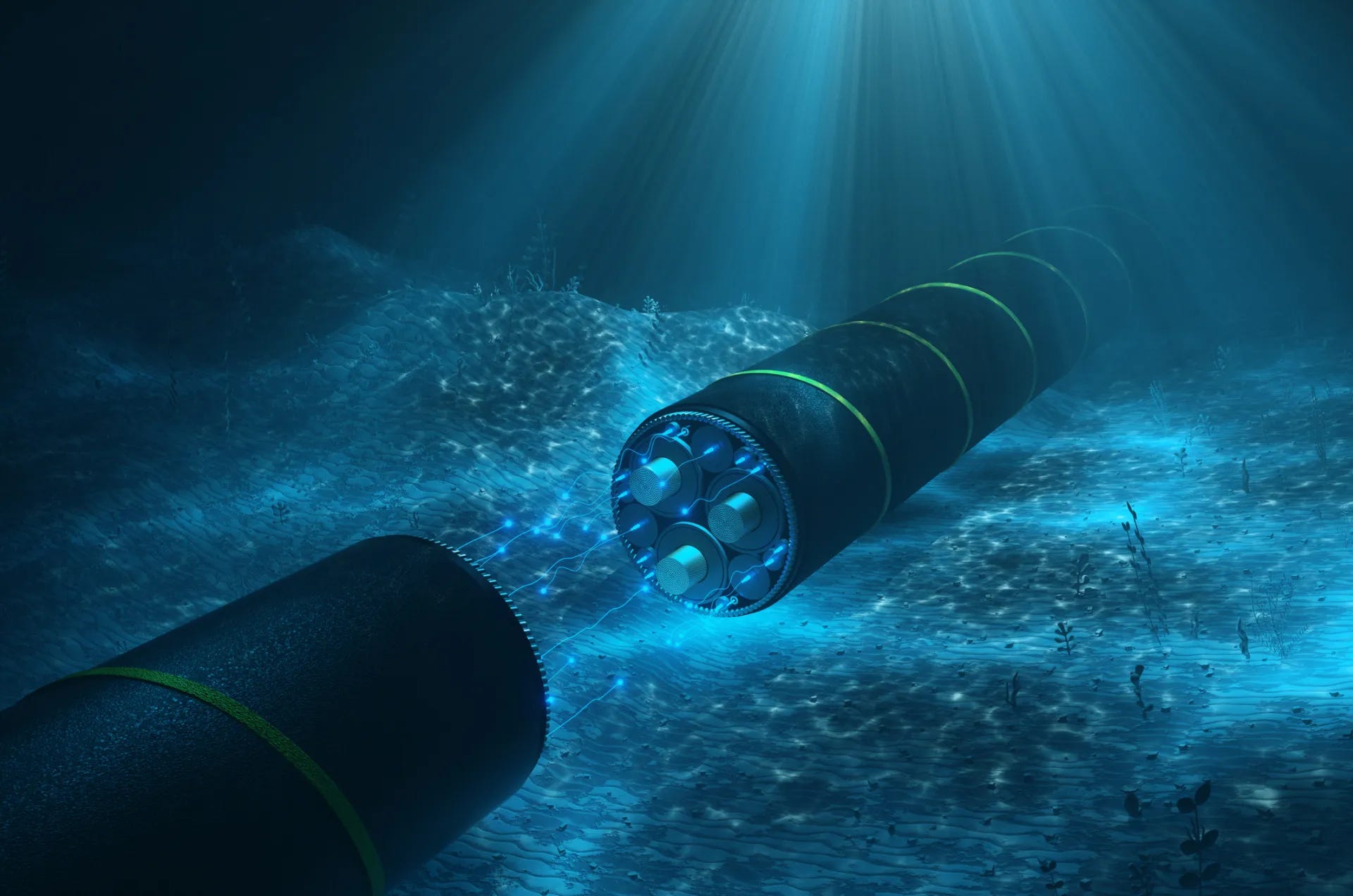
Undersea cables remain Taiwan’s most important communications infrastructure and will continue to carry the overwhelming majority of international data traffic. While individual cable cuts can degrade connectivity, a complete communications blackout would require simultaneous disruption of multiple cable systems. Taiwan’s priority should therefore be increasing redundancy, hardening infrastructure, improving surveillance, and strengthening its ability to detect, attribute, and respond to deliberate interference.
Satellite communications can provide an important backup when undersea connections are disrupted, but they cannot replace cables due to their far lower bandwidth capacity. Taiwan’s objective should be to develop multiple layers of redundancy through diverse providers and technologies rather than relying on any single system. Communications resilience depends on maintaining overlapping networks that can compensate for failures elsewhere.
Electronic warfare is likely to become an increasingly important challenge because it can disrupt communications, navigation, transportation, and military operations without requiring direct physical attacks. Taiwan must therefore prepare for degraded electromagnetic environments and develop alternative methods of communication and coordination that can function when conventional systems are jammed or spoofed.
Cyber operations and disinformation campaigns are likely to accompany any major crisis. Their purpose is not only to disrupt systems but also to create confusion, undermine trust, complicate decision-making, and weaken societal morale. Information warfare seeks to shape perceptions before and during conflict, making resilience against manipulation as important as resilience against physical disruption.
Civilian and military resilience are inseparable. Communications networks support emergency services, infrastructure management, economic activity, government administration, and defense operations simultaneously. Taiwan’s preparedness therefore depends on integrating civil and military planning, improving coordination between local and central authorities, and ensuring continuity of operations even under severe communications disruptions.
Maritime domain awareness remains a critical weakness because effective protection of undersea infrastructure depends on persistent monitoring, intelligence analysis, and rapid response capabilities. Surveillance systems alone are insufficient without the personnel, institutions, and coordination mechanisms necessary to identify suspicious activity and act upon it in real time.
The broader objective is not only to preserve connectivity but also to deny coercive strategies their intended effects. The longer Taiwan can maintain communications with its population, its military, and international partners, the more difficult it becomes to isolate the island, undermine public morale, or achieve strategic objectives through pressure and disruption alone.
Source: CNAS
Full AI Summary
I. Information Dominance as a Strategic Objective
Information control is increasingly viewed as a decisive element of modern conflict, shaping military operations, political decision-making, public morale, and international responses.
The contest over communications infrastructure extends across peacetime competition, gray-zone coercion, crises, and wartime scenarios.
II. Undersea Cables as Critical Infrastructure
Undersea cables remain the backbone of international connectivity and are essential for economic activity, government functions, and communications.
Repeated incidents involving cable damage demonstrate the vulnerability of this infrastructure to both accidental disruption and deliberate interference.
Disrupting individual cables degrades bandwidth and increases latency, but complete isolation would require severing all major international connections.
III. Maritime Threats and Infrastructure Protection
Monitoring, attribution, and deterrence are complicated by the difficulty of distinguishing intentional sabotage from routine maritime accidents.
Effective protection requires persistent surveillance, stronger maritime domain awareness, enhanced intelligence sharing, and improved coordination among security agencies.
Cable landing stations represent additional vulnerabilities that require physical hardening and security measures.
IV. Satellite Communications as a Backup Layer
Satellite communications can provide continuity during disruptions but cannot replace undersea cables due to substantially lower bandwidth capacity.
Effective satellite resilience depends on diversified providers, sufficient constellation scale, access to terminals, and functioning ground infrastructure.
Redundancy across multiple systems is considered more reliable than dependence on any single provider.
V. Electronic Warfare and Spectrum Competition
Electronic warfare increasingly affects entire operational environments rather than isolated tactical engagements.
Jamming, spoofing, and electromagnetic interference can disrupt navigation, communications, logistics, transportation, and military operations.
Spectrum control is becoming a critical factor in both civilian resilience and military effectiveness.
VI. Cyber Operations and Information Manipulation
Cyberattacks can disrupt services, destroy data, impair critical infrastructure, and reduce response capabilities before kinetic conflict begins.
Disinformation campaigns can create uncertainty, undermine public confidence, distort decision-making, and weaken societal cohesion.
Cyber and information operations function as preparatory tools that shape conditions before and during conflict.
VII. Resilience Through Decentralization and Coordination
Local authorities and organizations must retain the ability to function during communication disruptions, but decentralization cannot fully replace coordination.
Critical services such as energy, transportation, and emergency management depend on reliable communication between local and central authorities.
Resilience requires balancing decentralized response capabilities with centralized coordination mechanisms.
VIII. Civil-Military Integration
Communication resilience has both civilian and military dimensions, making cooperation between government agencies, civil society, and defense institutions essential.
Preparedness efforts increasingly emphasize integrated exercises, contingency planning, and continuity of operations under degraded communication conditions.
Maintaining communications supports governance, emergency response, public confidence, and military command and control simultaneously.
IX. Intelligence, Surveillance, and Data Fusion
Effective defense depends not only on sensors and platforms but also on the ability to integrate, analyze, and act on large volumes of information.
Intelligence fusion, analyst capacity, and cross-agency information sharing are critical for identifying threats and responding rapidly.
Persistent situational awareness remains a major challenge in contested maritime and information environments.
X. Deterrence Through Sustained Connectivity
Preserving communications supports both domestic resilience and the ability to engage international partners during crises.
The ability to maintain information flows strengthens morale, preserves strategic initiative, and complicates coercive pressure campaigns.
Repeated interference against communications infrastructure requires coordinated responses rather than reliance on undefined escalation thresholds.
Images on this site are licensed under Creative Commons (CC) or public domain, unless stated otherwise. Some images were generated using AI tools. See individual image attributions for details.